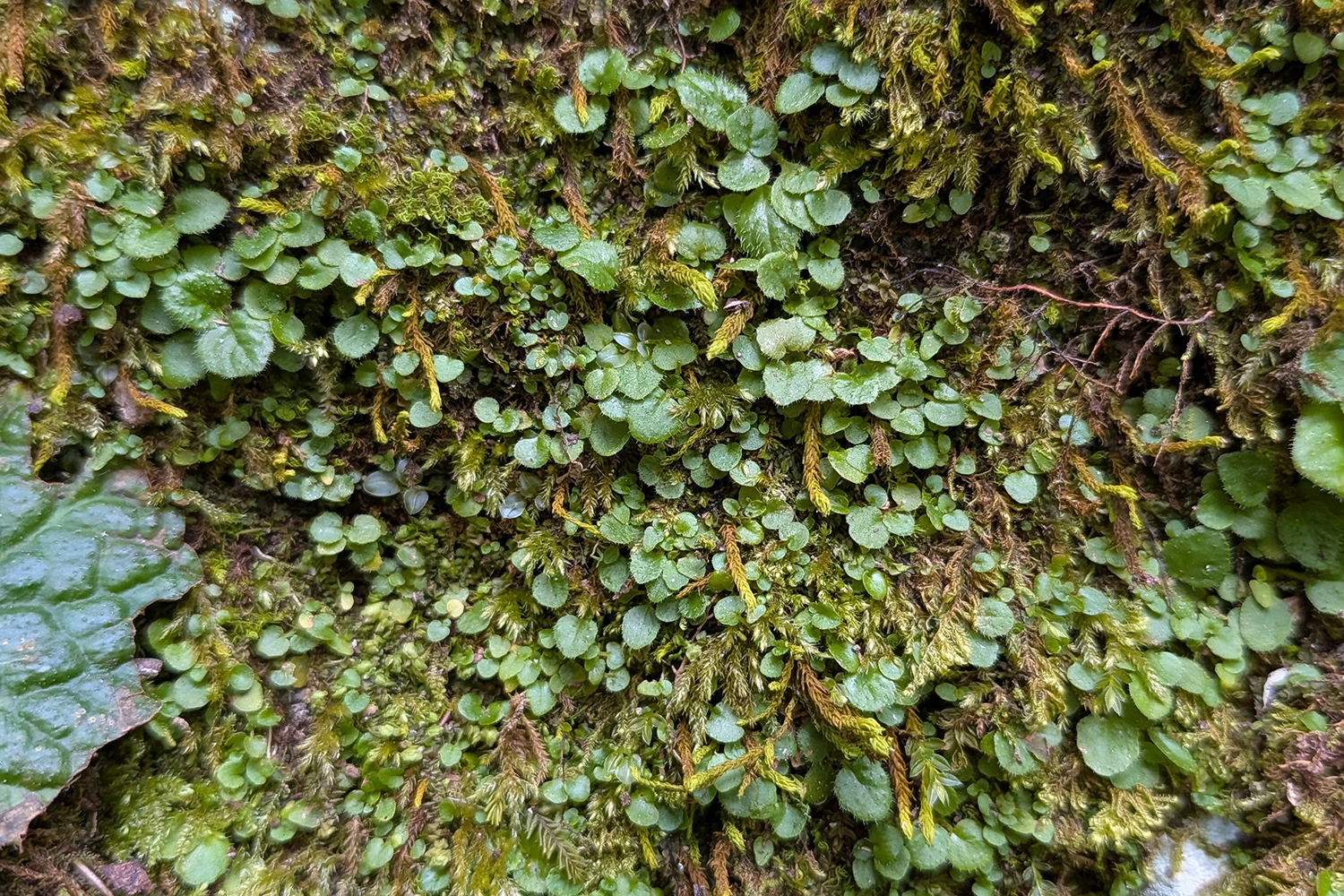
Species profile 4: Ramonda myconi
Ramonda myconi is one of the most remarkable plants of southwestern Europe. Belonging to the Gesneriaceae family, it is a relic species that survived the climatic oscillations of the Ice Ages in sheltered mountain refugia. Together with 3 other related species from the Balkans, it represents one of the very few temperate members of a plant family otherwise centred in tropical regions. Its ability to survive prolonged desiccation has also earned it the name of a “resurrection plant”. In Catalan, R. myconi is known as “orella d’os”, “bear’s ear”.
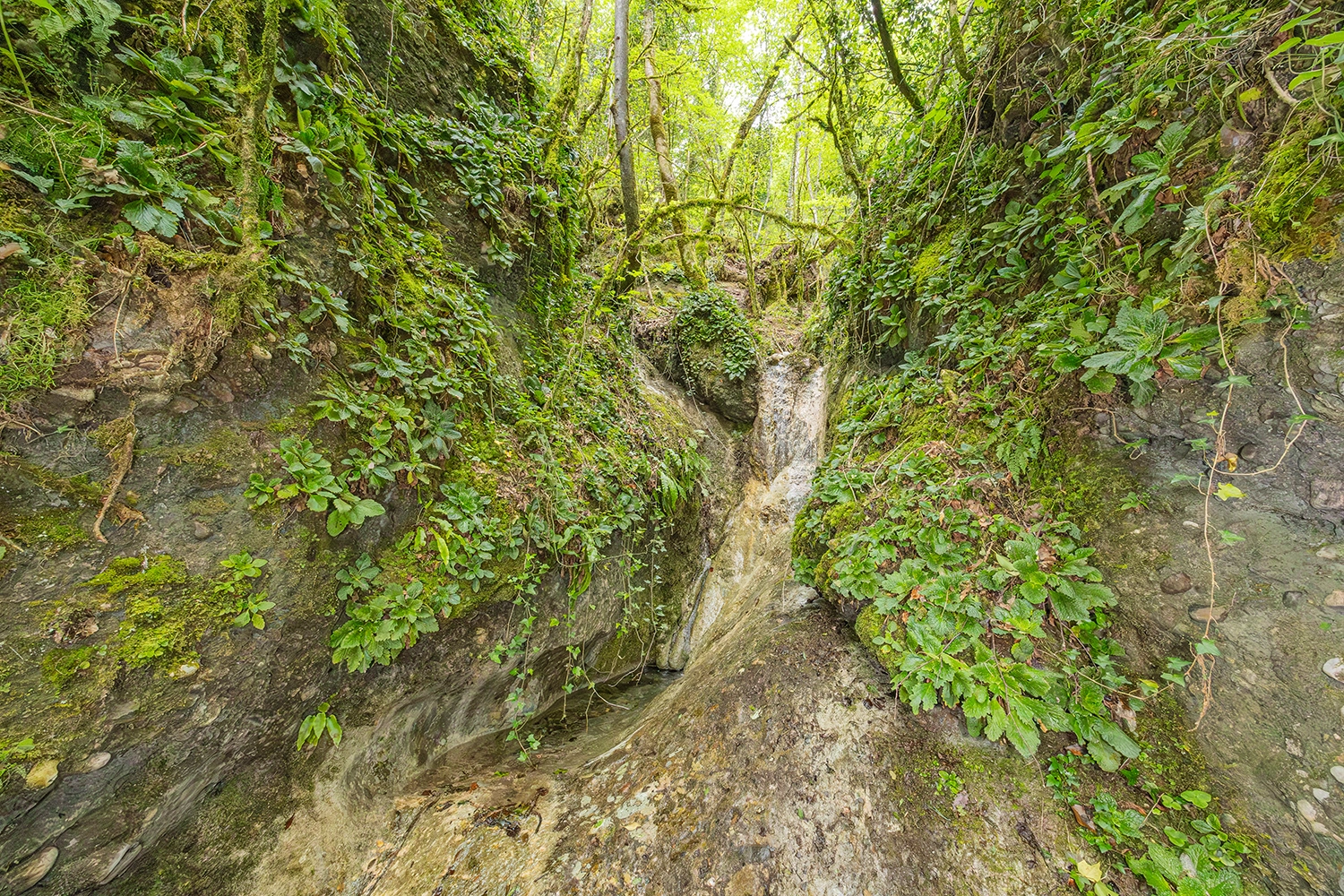
Ramonda myconi (L.) Rchb.
Also known as the Pyrenean violet, Ramonda myconi is endemic to the Pyrenees and adjacent mountain ranges of northeastern Spain. It grows almost exclusively on humid limestone cliffs, shaded rock faces, and mossy walls, often in areas with constant atmospheric moisture. These habitats provide stable conditions that protect the plant from excessive summer heat and drought.
The species forms evergreen basal rosettes covered in dense hairs, helping reduce water loss and protect the leaves from rapid environmental fluctuations. During dry periods, the leaves can curl inward and desiccate almost completely, later recovering once moisture returns. This remarkable adaptation allows the species to persist on exposed rock faces where soil and water availability are limited.
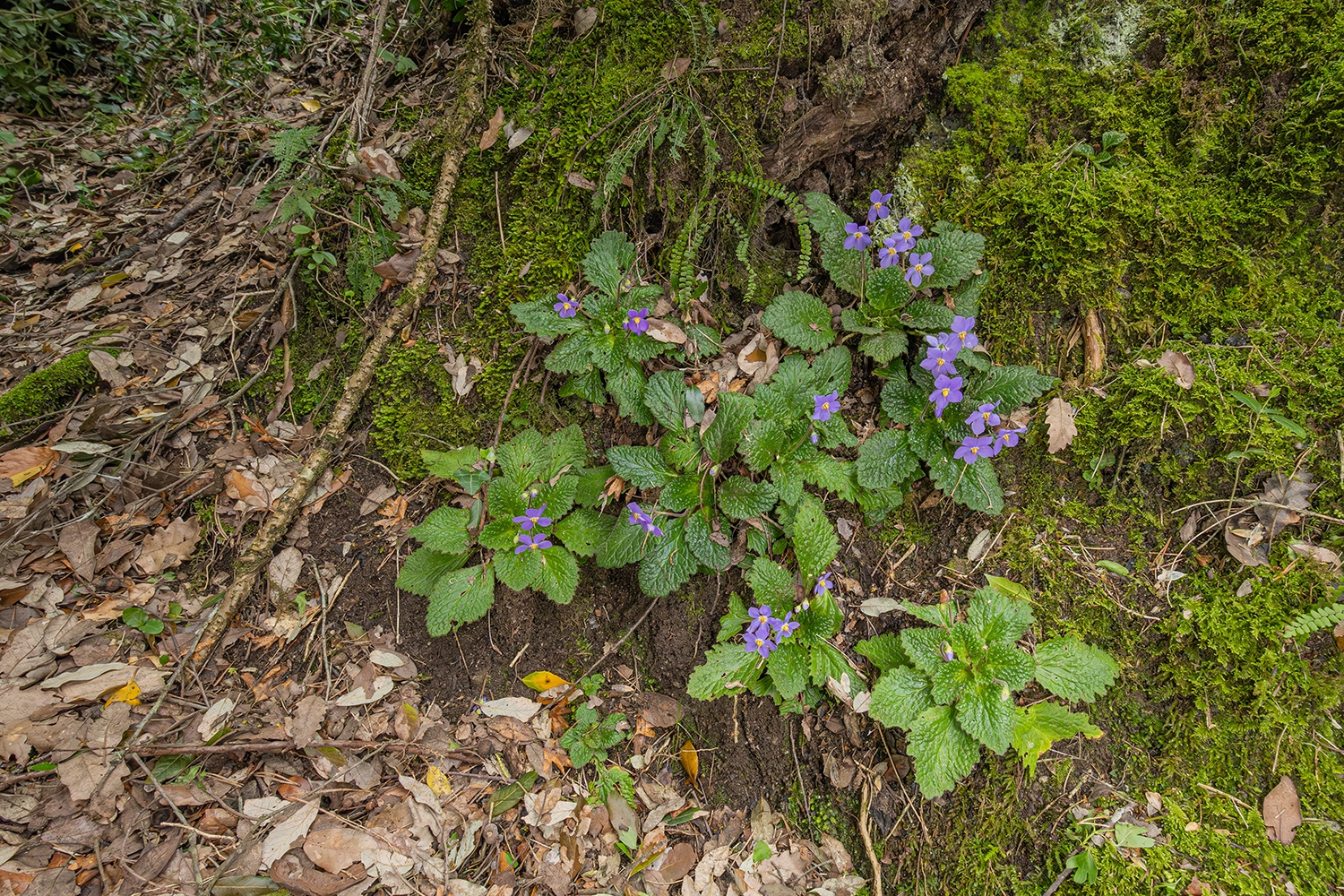
In many locations, R. myconi shares these cliff habitats with other specialised calcicolous plants adapted to vertical environments. One particularly striking associate is Saxifraga longifolia, another iconic species of limestone cliffs in the Pyrenees area.
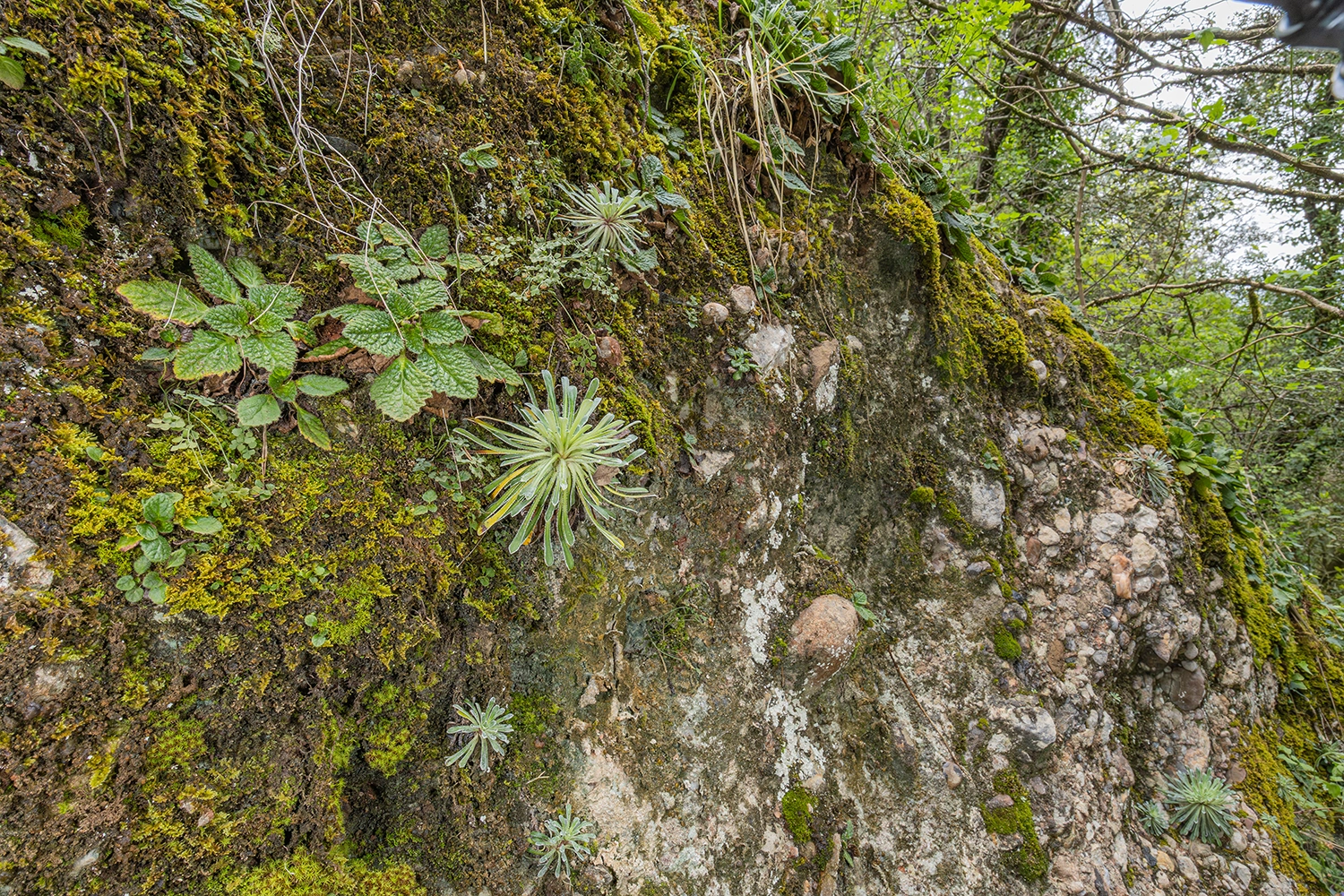
Although often associated with deeply shaded and humid conditions, the species can also persist on more exposed cliff faces provided enough moisture remains available within the rock fissures and microhabitats.
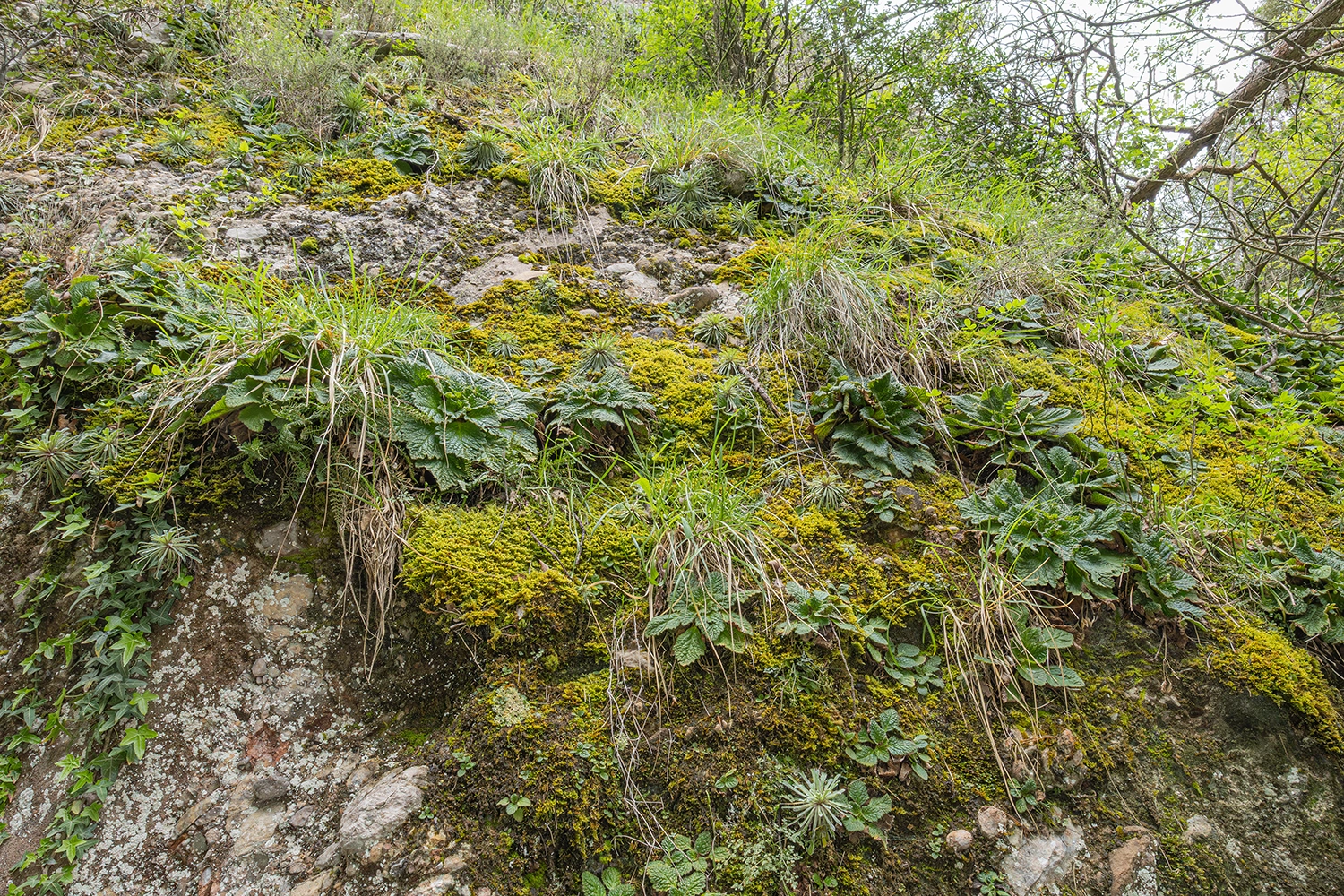
In some areas, there was also clear recruitment of young plants growing within the moss and rock crevices, suggesting that local populations are reproducing successfully and remain healthy under current conditions.